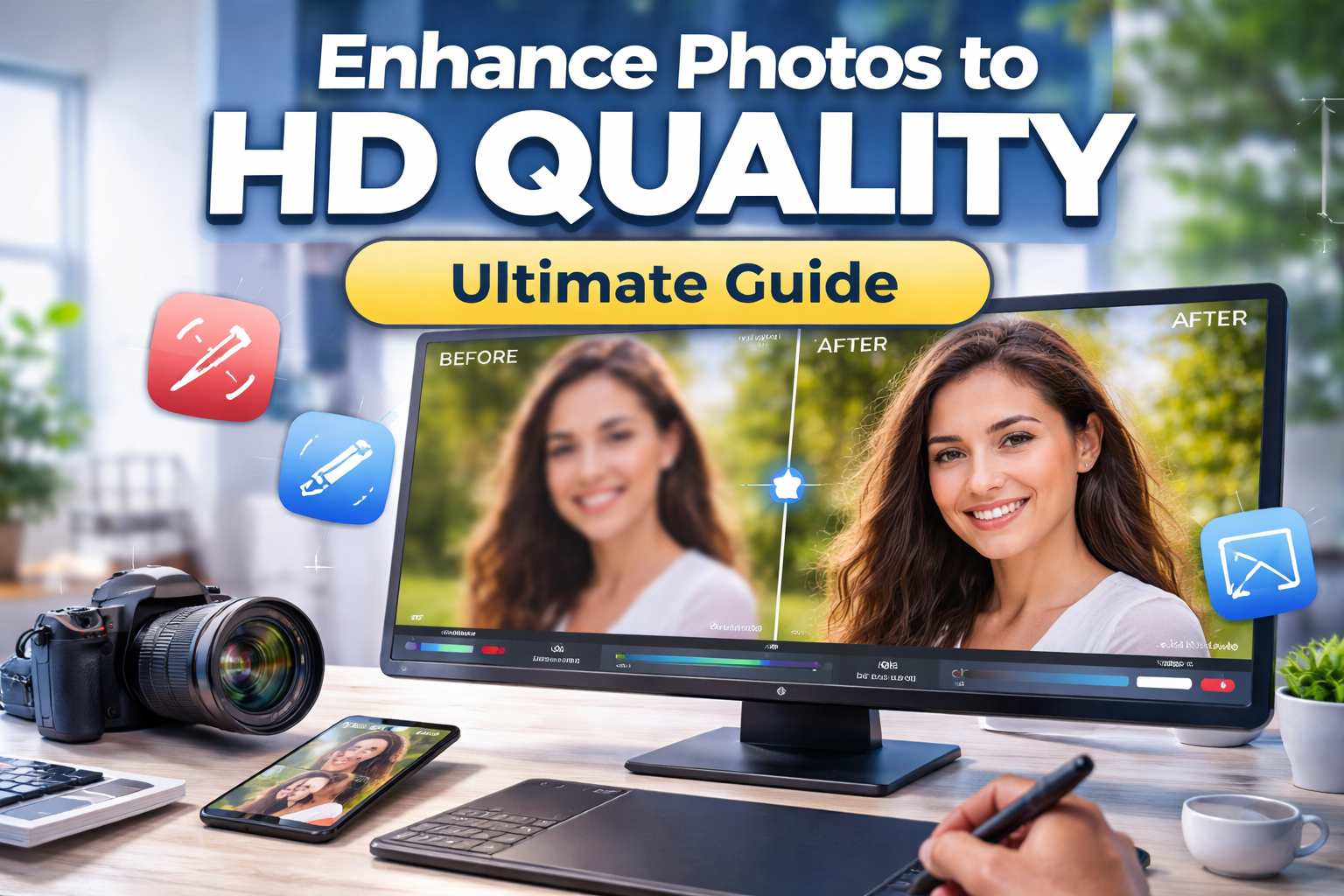
High-quality images are crucial in today’s digital environment. Having HD-quality photos may be quite beneficial, whether you are a blogger, content developer, designer, or just someone who enjoys taking pictures. While clear, high-definition photos quickly improve your content, blurry, pixelated, or low-resolution photos can lessen its effect.
Even if you’re a novice, this comprehensive book will teach you how to improve images to HD quality using basic methods, equipment, and expert advice.
What Does “HD Photo Enhancement” Mean?
Improving an image’s resolution, clarity, sharpness, and general visual quality is referred to as HD photo improvement. This procedure may involve:
Improving the resolution of images
lowering blur and noise
Enhancing colors and lights
Refining details
Restoring old or damaged pictures
The goal is to make your image look clearer, more vibrant, and visually appealing without losing its natural feel.
Why High-Quality Images Matter
There are several reasons why high-quality images are crucial:
1. Increased Involvement
HD photos instantly capture attention, particularly on websites and social media.
2. Expert Appearance
Sharp photos increase credibility and trust if you own a blog, website, or company.
3. Better search engine optimization
Content with optimized, high-quality photos is ranked higher by search engines.
4. Greater Emotional Influence
Emotions are more successfully communicated through clear imagery, which is crucial for narrative.
Methods to Enhance Photos to HD Quality
You may enhance your images in a number of ways, from basic smartphone apps to sophisticated software.
1. Use AI Photo Enhancer Tools
Image editing has been transformed by artificial intelligence. In just a few seconds, AI techniques can automatically enhance the quality of photos.
Well-liked AI Tools:
Remini
Let’s Improve
Adobe Firefly Fotor AI Enhancer
How It Operates:
Upload your picture.
AI recognizes low resolution, noise, and blur.
automatically improves detail and sharpness
Benefits
Fast and easy
Beginner-friendly
No technical skills required
2. Use Professional Editing Software
Professional tools are the best choice if you want more control.
Suggested Software:
Lightroom, GIMP, and Adobe Photoshop (Free)
Important Methods:
✏ Boost Resolution
To carefully increase resolution, use the “Image Size” settings.
✏ Sharpen Details
Use sharpening filters to improve clarity and edges.
◦ Modify Contrast and Brightness
For a more vibrant and natural appearance, balance the lighting.
✏ Diminish Noise
Eliminate graininess, particularly in photos taken in low light.
3. Mobile Apps for Quick Enhancement
A computer is not always necessary. Your smartphone is capable of doing the task flawlessly.
Top Apps:
The Snapseed
PicsArt
Features of Lightroom Mobile:
One-tap improvement
Presets and filters
Controls for manual editing
4. Online Photo Enhancement Websites
Online tools are an excellent choice if you don’t want to install software.
For instance:
Canva Deep Image AI Photo Enhancer
Advantages of VanceAI
Installation is not necessary.
Available on any device
Simple to use
Step-by-Step Guide to Enhance a Photo
Here’s a quick procedure you can use:
Step 1: Select Your Tool
Depending on your level of expertise, choose an editing program or AI tool.
Step 2: Upload Your Picture
Make sure the original image is as clear as you can.
Step 3: Modify the resolution
To prevent distortion, carefully enlarge the image.
Step 4: Boost Sharpness
To improve details, use sharpening tools.
Step 5: Adjust Colors and Lighting
Modify the white balance, saturation, contrast, and brightness.
Step 6: Get Rid of Noise
For a smoother appearance, tidy up any grainy spots.
Step 7: Export in Superior Quality
Save your picture in high definition (JPG, PNG, or WebP).
Common Mistakes to Avoid
Errors can degrade your image quality even with high-quality gear.
Over-Sharpening
Unnatural edges are produced by excessive sharpening.
Excessive editing
Photos with too many filters may appear phony.
Over-upscaling
Pixelation results from exceeding resolution limits.
Ignoring Original Quality
Don’t expect miracles from a very low-quality photograph; it has limitations.
Tips for Professional-Level Results
Do you want your pictures to appear as though they were professionally edited? Observe these suggestions:
Make Use of High-Resolution Originals
Improved input leads to improved output.
Preserve a Natural Appearance
Keep colors natural and steer clear of drastic alterations.
Pay Attention to Lighting
More than any instrument, good lighting enhances quality.
✏ Utilize Advanced Layer Editing
Use layers in Photoshop to make exact edits.
✏ Store Several Versions
The original file should always be kept secure.
Best Use Cases for HD Photo Enhancement
There are numerous applications for HD photo enhancement:
Websites & Blogging
increases user engagement and SEO.
Social Media Content
More likes, shares, and follows result from better images.
E-commerce
Sales are boosted by high-quality product photos.
YouTube Thumbnails
More clicks are drawn to sharp thumbnails.
Individual Recollections
Clearly restore antique family photos.
Future of Photo Enhancement
AI and machine learning will drive photo enhancement in the future. New instruments can:
automatically repair damaged photos
Add color to black-and-white images
Create the missing information
Improve videos instantly
This implies that even novices can produce expert outcomes with little work.
Final Thoughts
It’s no longer difficult to enhance images to HD quality. Anyone may turn low-quality photos into beautiful pictures with the help of contemporary AI algorithms and user-friendly apps.
High-quality photos will always provide you an advantage, whether you’re creating a website, expanding your social media, or archiving memories. Using the proper tools, avoiding excessive editing, and concentrating on preserving a clean, natural appearance are crucial.
Start practicing now, try out various tools, and before long, you’ll be producing HD photographs of a professional caliber with ease.